Existing concrete walkway has cracked, heaved, or settled unevenly
Front walk doesn't match the upgraded look of the house
Walkway is too narrow for two people to walk side-by-side
Pavers have shifted creating trip hazards
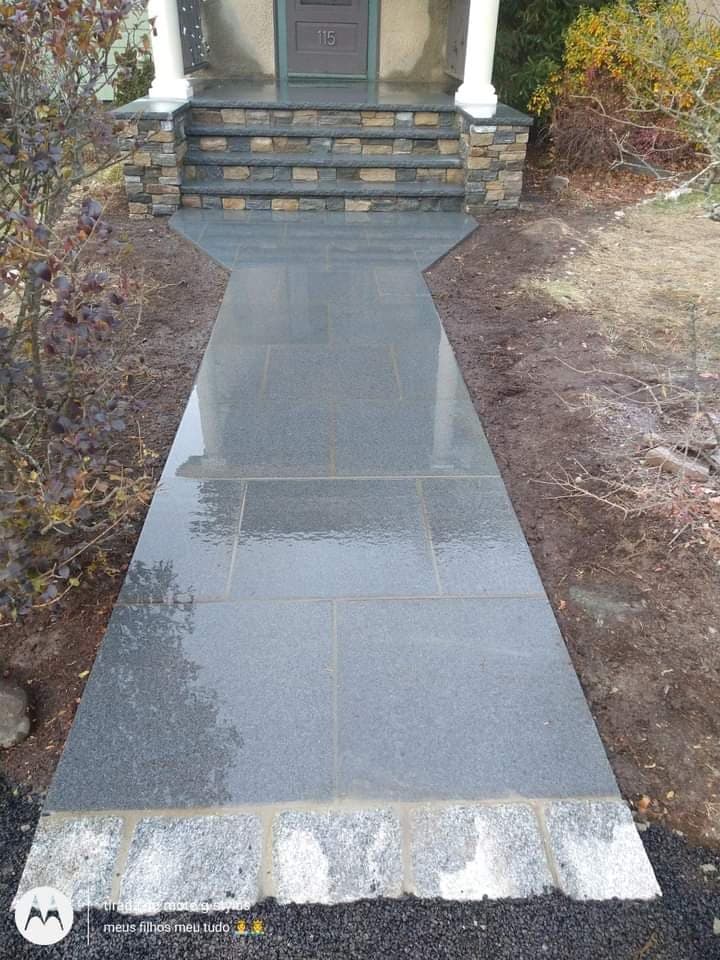
Stoop and walkway transition is failing
Recent project
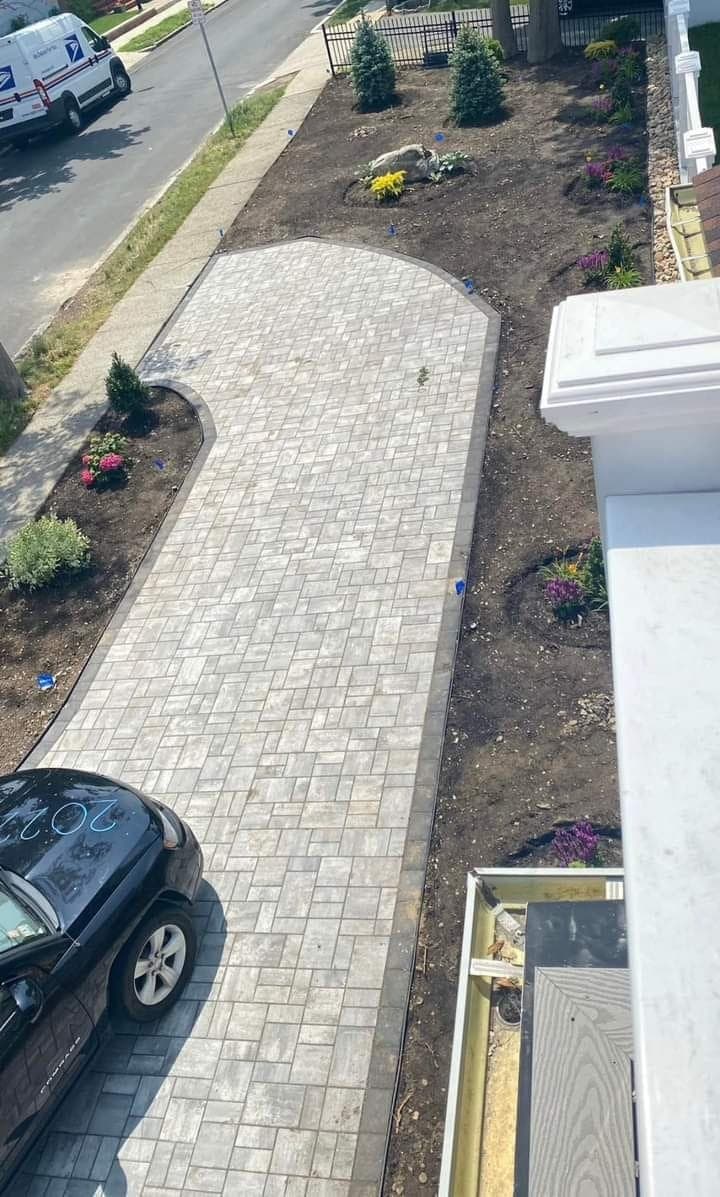
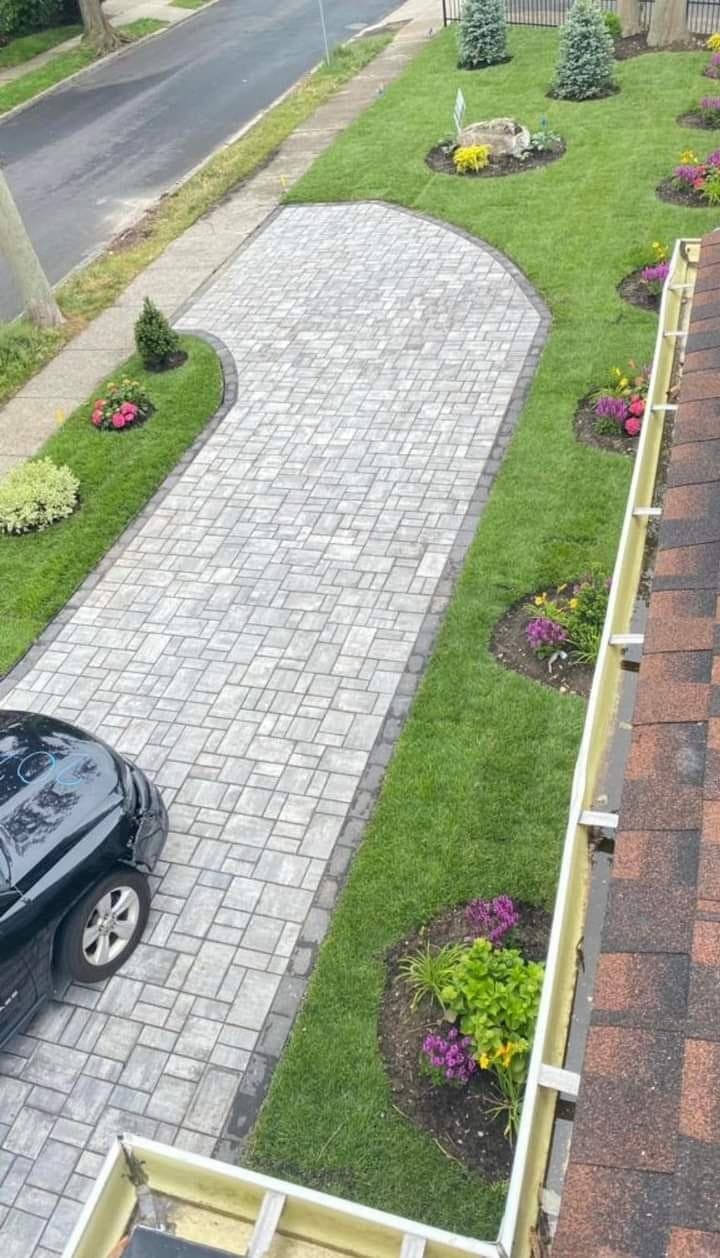
Curved paver walkway
Materials
Bluestone (irregular or thermal-finished)
Brick paver
Granite cobble
Concrete paver
Natural fieldstone stepping stones
What we inspect
Base depth (4–6" of compacted ¾" crushed stone)
Pitch (1/4" per foot toward landscape, never the house)
Polymeric joint sand or proper mortar joints
Edge restraint
Smooth transition at stoop and driveway
Walkway FAQ
How wide should my front walkway be?
Minimum 4 feet, ideally 5 feet to allow two people to walk side-by-side. Estate walks can be 6+ feet wide for proportional balance with larger homes.
What's better — stone or pavers?
Natural stone (bluestone, granite) offers premium curb appeal and longest lifespan. Concrete pavers offer more pattern variety and lower cost. Both are excellent when properly installed.
Will the walkway crack in winter?
Properly installed stone and paver walks won't crack — they flex with freeze-thaw via segmented joints. Poured concrete is the surface most likely to crack.