How New England Freeze-Thaw Destroys Chimney Mortar (and When to Repoint)
By Jonildo Leitão · JL Masonry & Construction, Woburn MA
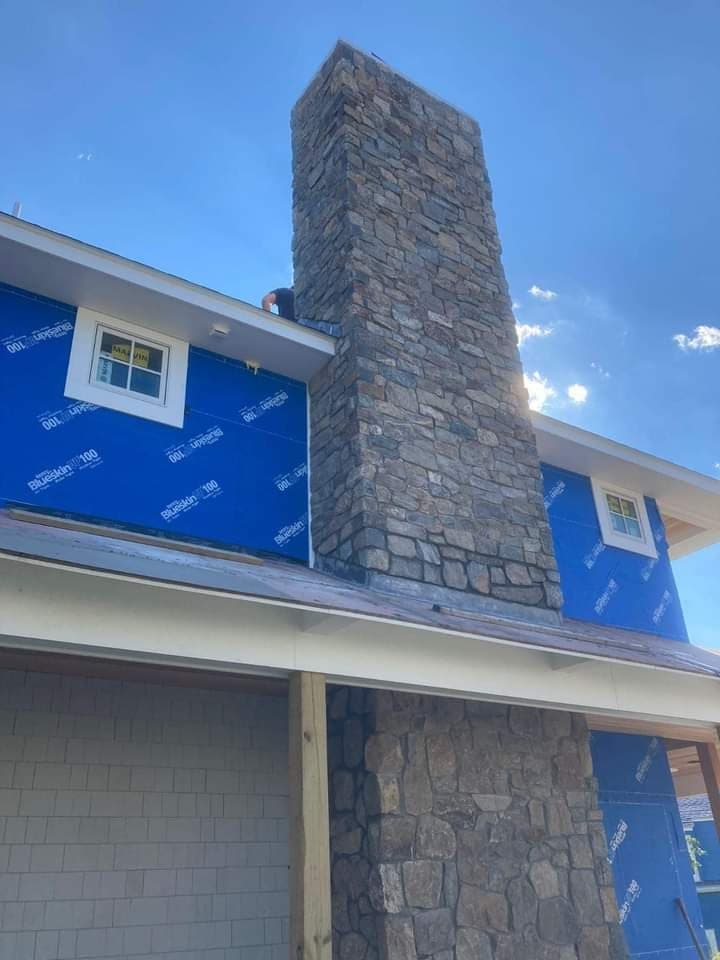
Every chimney we take apart in Massachusetts fails the same way. Not from wind, not from age on its own, and almost never from the fire inside it. It fails because water got into the masonry and then froze.
Understanding that one cycle tells you most of what you need to know about when your chimney needs attention — and how long you can safely put it off.
What freeze-thaw actually does to a chimney
Water expands roughly 9% when it freezes. When that happens inside a mortar joint, inside a crack in the crown, or inside the pores of a brick, it pushes outward with far more force than the mortar can resist.
The thaw is the other half of the problem. The ice melts, the joint is now slightly wider than it was, and the next rain puts more water in than before. Greater Boston runs through dozens of freeze-thaw cycles between November and March, and a chimney standing above the roofline gets wind-driven rain from every direction with no overhang protecting it.
That is why chimneys fail years before the walls of the same house do. They are the most exposed masonry on the building and usually the least inspected.
The signs you can see from the ground
You do not need to be on a roof to know a chimney is in trouble. Stand back on the lawn with a pair of binoculars or the zoom on your phone and look for:
- Joints that look recessed or shadowed compared to the rest of the stack — mortar washing out leaves the brick standing proud
- Missing chunks of mortar, or gaps you can see daylight-colored sky through at the corners
- Brick faces that look flaky, pitted or like a thin layer has popped off (spalling) — that is water that froze inside the brick itself
- White chalky staining running down the stack (efflorescence): salts carried out of the masonry by water moving through it
- A crown at the top that is cracked, or that is just a smear of mortar instead of a cast slab with an overhang
- A stack that looks like it leans, bows, or has a visible kink partway up
The signs you will only see inside
Just as often, the first evidence shows up indoors, and people blame the roof for it:
- Water staining on the ceiling or wall near where the chimney passes through
- Damp, musty smell in a fireplace that has not been used
- Rust on a damper or on the firebox
- Peeling paint or crumbling plaster on the chimney breast in an upstairs room
Repoint, or rebuild?
This is the question that decides the cost, and the honest answer depends on what has failed.
If the brick or stone itself is sound and only the joints have washed out, repointing is the right repair. We cut the failed mortar out to at least twice the joint width, clean the joint, pack it with mortar matched to the original, and tool it to the same profile. Done properly, that buys 25 to 50 years.
Once the brick itself is spalling across large areas, or the stack leans, bows or has open vertical cracks, repointing only hides the problem. Fresh mortar in a wall that is already moving will crack again within a season or two. At that point the affected section — usually everything above the roofline — has to come down and go back up.
There is a third case worth knowing about: a chimney that was repointed at some point with hard Portland-based mortar on soft old brick. Portland mortar is stronger than pre-1930 brick, so when the wall moves, the brick face breaks instead of the joint. Those chimneys often need brick replacement along with the repointing, and a softer, lime-based mix going back in.
Fix the water first
The mistake we see most often is repointing a chimney while the thing that let the water in is still there. Before any joint work, the crown, the cap and the flashing have to be right.
The crown is the sloped slab at the very top. It should be cast concrete with an overhang and a drip edge that throws water clear of the brick — not a thin skim of mortar troweled flat, which cracks in the first winter. A cap over the flue keeps rain out of the chimney interior.
The flashing is where the chimney meets the roof. Step flashing and counter-flashing, properly let into a joint and sealed, is what keeps that junction dry. A bead of caulk over an old failed flashing is a one-season fix, and it is where a large share of 'my chimney leaks' calls actually start.
Why timing matters more than people expect
Mortar needs temperatures above roughly 40°F to cure properly, and it needs to stay there while it sets. That is why serious chimney work in Massachusetts runs from April into late fall and then stops.
Practically, that means a chimney with open joints in December is taking on water for four or five months before anyone can fix it. A joint you could have repointed in the fall can easily be a rebuild by the time the ground thaws. If you are seeing the signs above now, getting on a schedule early in the season is worth more than it sounds.
Questions we get asked
- How often does a chimney need repointing?
- Quality mortar lasts 25 to 50 years, but exposure decides it. A chimney on the weather side of the house with no cap can need work in 15 years; a sheltered one with a good crown can go much longer. Look at the joints, not the calendar.
- Can chimney repointing be done in winter?
- Generally no. Mortar needs to stay above about 40°F while it cures. Small emergency repairs are sometimes possible, but full repointing and rebuilds wait for spring — which is why fall inspections matter.
- How much does chimney repointing cost in Massachusetts?
- Most chimney repointing runs $1,500–$5,000 depending on height, roof pitch, access and how much of the stack has failed. A rebuild above the roofline costs more. We price it after an on-site inspection, in writing.
- Is a cracked chimney crown urgent?
- It is the single most common entry point for water. A cracked crown lets rain straight into the core of the chimney, where it freezes. Recasting a crown is a small job compared to the rebuild it prevents.