Salt, Ice Melt and Your Stonework: What's Safe for Pavers and Bluestone
By Jonildo Leitão · JL Masonry & Construction, Woburn MA
Every spring we get called to look at steps and walkways that were fine in October and are crumbling in April. Most of the time the owner did nothing wrong except buy the cheapest bag at the hardware store.
Here is what de-icers actually do to masonry, and what to put down instead.
Why rock salt is hard on masonry
Rock salt — sodium chloride — does two things to stonework, and neither is about the salt being corrosive in the way people imagine.
First, it drives more freeze-thaw cycles. Salt lowers the freezing point, so instead of your steps freezing once in November and staying frozen, the surface melts and refreezes over and over through the winter. Every one of those cycles is another chance for water in a pore or a joint to expand.
Second, salt crystals grow inside the pores of concrete and some stone as the solution dries. That growth pushes from the inside, which is what makes a concrete step surface flake away in sheets. Masons call it scaling, and once it starts you cannot reverse it — you can only resurface or replace.
What is at risk, in order
Not all masonry reacts the same way. Roughly from most vulnerable to least:
- Concrete poured within the last year — new concrete has not finished curing and scales very easily. Keep all de-icer off it for the first full winter
- Mortar joints on brick stoops, steps and walls — mortar is softer than the units around it and goes first
- Precast concrete steps and pavers — surfaces pit and lose their colored top layer
- Bluestone — natural stone, but porous enough to spall at the edges with heavy salt use
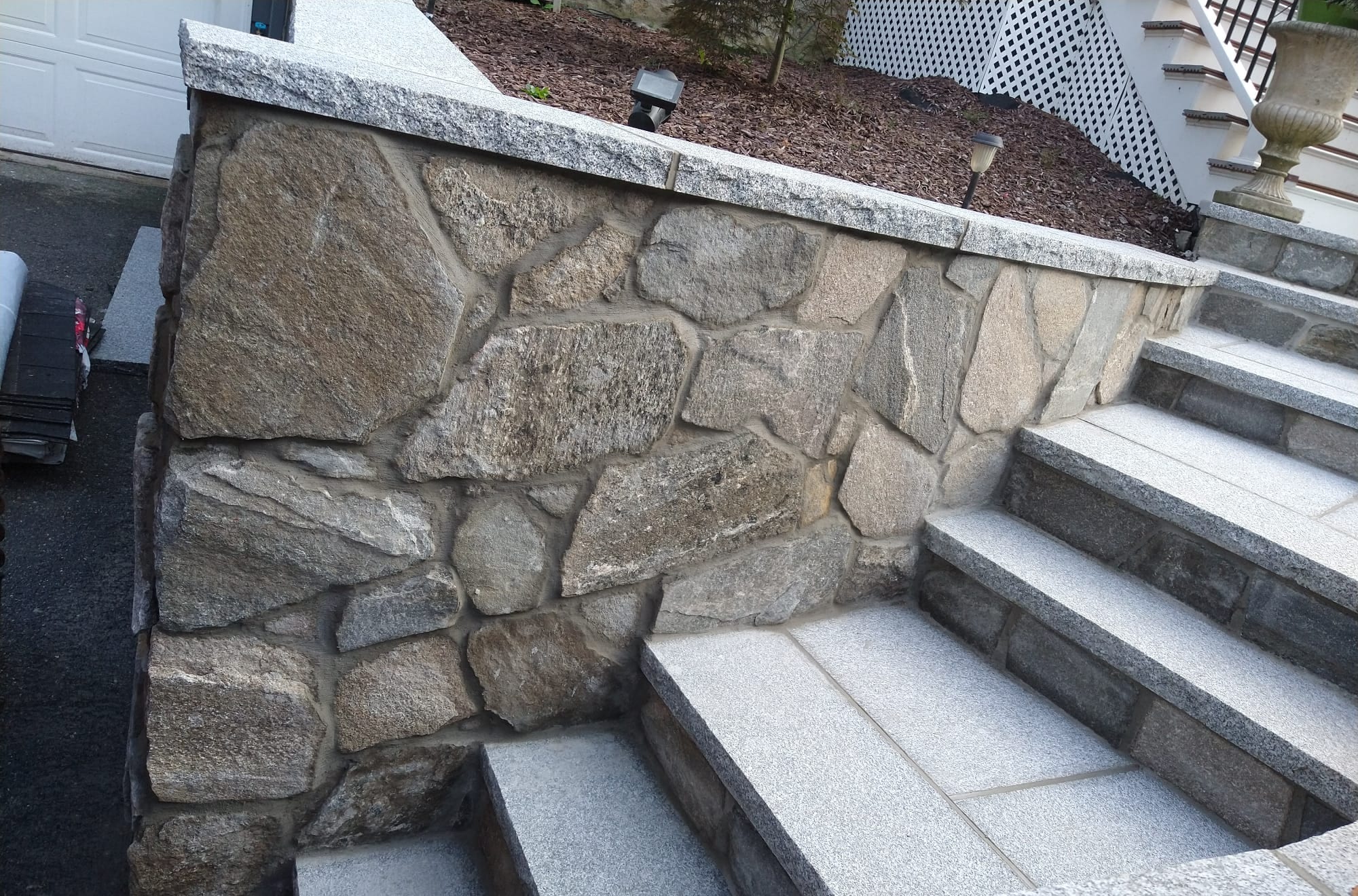
- Granite — the most resistant of the common materials here, which is a large part of why we recommend it for steps
What to use instead
There is no de-icer that is completely harmless, but there are clear tiers:
- Sand or stone grit: no melting at all, pure traction, zero chemical damage. The best choice on anything new or already damaged. Sweep it up in spring so it does not wash into joints
- Calcium magnesium acetate (CMA): the gentlest common de-icer on concrete and mortar. Costs more and works more slowly in deep cold
- Magnesium chloride: works at lower temperatures than rock salt and is easier on masonry, though not harmless
- Calcium chloride: effective, but hard on concrete at high concentrations. Use sparingly
- Rock salt (sodium chloride) and anything with ammonium sulfate or ammonium nitrate: avoid on masonry. The ammonium compounds attack concrete directly
Habits that matter more than the product
How you use the de-icer matters as much as which one you buy.
- Shovel first, then treat. De-icer is for the thin layer left behind, not for melting six inches of snow
- Spread it thin. More product does not melt faster; it just leaves more salt sitting in the stone
- Clear the slush once it melts. Leaving salty water to refreeze on the surface is the worst case
- Keep de-icer off brand-new work for its first winter, with no exceptions
- Watch where the runoff goes. Salty melt that drains into a planting bed or against a foundation wall causes its own problems
If the damage is already done
Scaled concrete steps and crumbled mortar joints do not heal. But what you do next depends on how deep it goes.
Surface scaling on concrete can sometimes be resurfaced, though in our experience it comes back within a few years if the slab underneath is saturated and the base is poor. Washed-out joints on a brick or stone stoop are a straightforward repointing job, and worth doing before water reaches the structure underneath.
When steps have moved — when a riser is now a different height from the others, or the whole unit has pulled away from the house — the problem is no longer the surface. That is the base, and that is a rebuild. If you are at that point, granite with a proper frost-depth footing is the version that stops the cycle for good.
Questions we get asked
- Is ice melt safe on pavers?
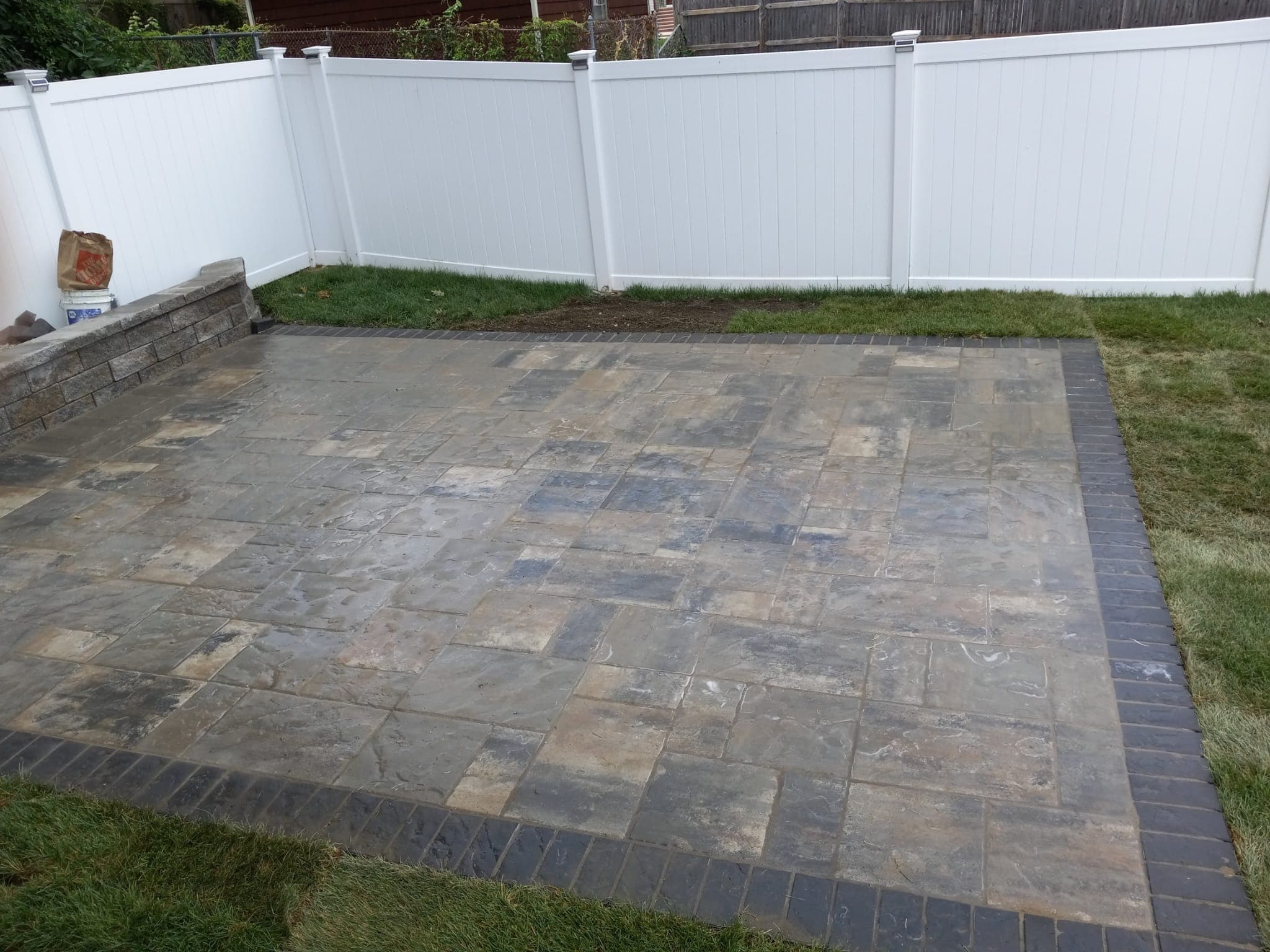
- Most paver manufacturers allow calcium magnesium acetate or magnesium chloride and warn against rock salt and anything containing ammonium. Sand is always safe. Never use de-icer on pavers installed within the last year.
- Will salt damage bluestone?
- Bluestone handles salt better than concrete but is porous enough to spall at the edges with heavy repeated use. Sand is the safer choice on bluestone treads and walkways.
- What is the best de-icer for concrete steps?
- Calcium magnesium acetate (CMA) is the gentlest effective option. On concrete poured within the past year, use sand only — no de-icer at all until it has been through a full curing season.
- Can scaled concrete steps be repaired?
- Surface resurfacing is possible, but if the base has moved or the risers are now uneven, resurfacing just hides it. At that point rebuilding on a proper footing — ideally in granite — is the repair that lasts.